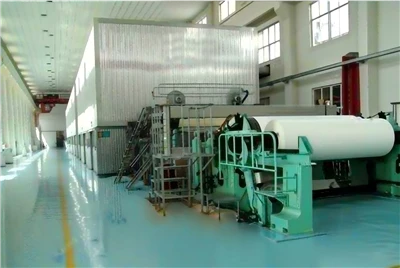

China: The Birthplace of Paper
c. 105 AD - Cai Lun, a court official of the Eastern Han Dynasty, is credited with improving the papermaking process. He used bark, hemp heads, old cloth, and fishnets as raw materials, processing them through crushing, pounding, frying, and baking. This paper became known as "Cai Hou Paper" and is considered the origin of modern paper.
Early Chinese paper was made from a suspension of hemp waste in water, washed, soaked, and beaten to a pulp with a wooden mallet.
Rattan paper replaced early hemp paper and was favored for centuries.
Bamboo Papermaking in China
Tang Dynasty (618–907 AD) - People first used bamboo as a raw material to make paper, a major breakthrough in papermaking technology. The success of bamboo papermaking demonstrated that ancient Chinese papermaking had reached a mature level.
The Tang Dynasty also saw the emergence of advanced processing: adding alum, adding glue, applying powder, sprinkling gold, and dyeing - laying the foundation for many varieties of craft papers.
Song Dynasty onward - Bamboo paper underwent great development. From Tang through Qing, China produced colored wax paper, cold gold, inlaid gold, ribbed, calendared paper, various rice papers, wallpapers, and flower papers.
The academic debate over bamboo paper's origins centers on two views: it began in the Jin Dynasty, or it began in the Tang Dynasty. The consensus leans toward the Tang Dynasty, as bamboo pulp papermaking requires high technical skill only available at that period.
Spread Beyond China
Papermaking knowledge gradually spread from China along the Silk Road to the Islamic world, and eventually to Europe by the 12th–13th centuries.
European paper was initially made from cotton and linen rags.